
Running is more than just putting one foot in front of the other, your form plays a crucial role in how your body absorbs impact, especially in your knees. Poor mechanics can lead to pain, inefficiency, and even long-term injuries. Fortunately, even small tweaks to your posture, foot strike, and stride can make a big difference. In this guide, we break down simple, science-backed adjustments to help you correct your running form, reduce knee strain, and move more efficiently.
Small adjustments to your running mechanics can significantly reduce the impact on your knees and improve overall efficiency. Key elements of proper running form include:
- Maintaining an upright posture
- Engaging the core
- Landing softly
- Ensuring proper foot strike
By focusing on these aspects, runners can reduce the strain on their knees and enhance their running performance.
Upright posture and engaged core
Maintaining an upright posture with a slight forward lean from the ankles helps to align the body and reduce unnecessary stress on the knees. Engaging the core muscles provides stability and support for the lower body, allowing for more efficient movement. Avoiding excessive forward or backward lean can help distribute the impact forces more evenly and reduce the risk of knee pain. Additionally, keeping the shoulders relaxed and swinging the arms naturally can contribute to a more fluid and efficient running form.
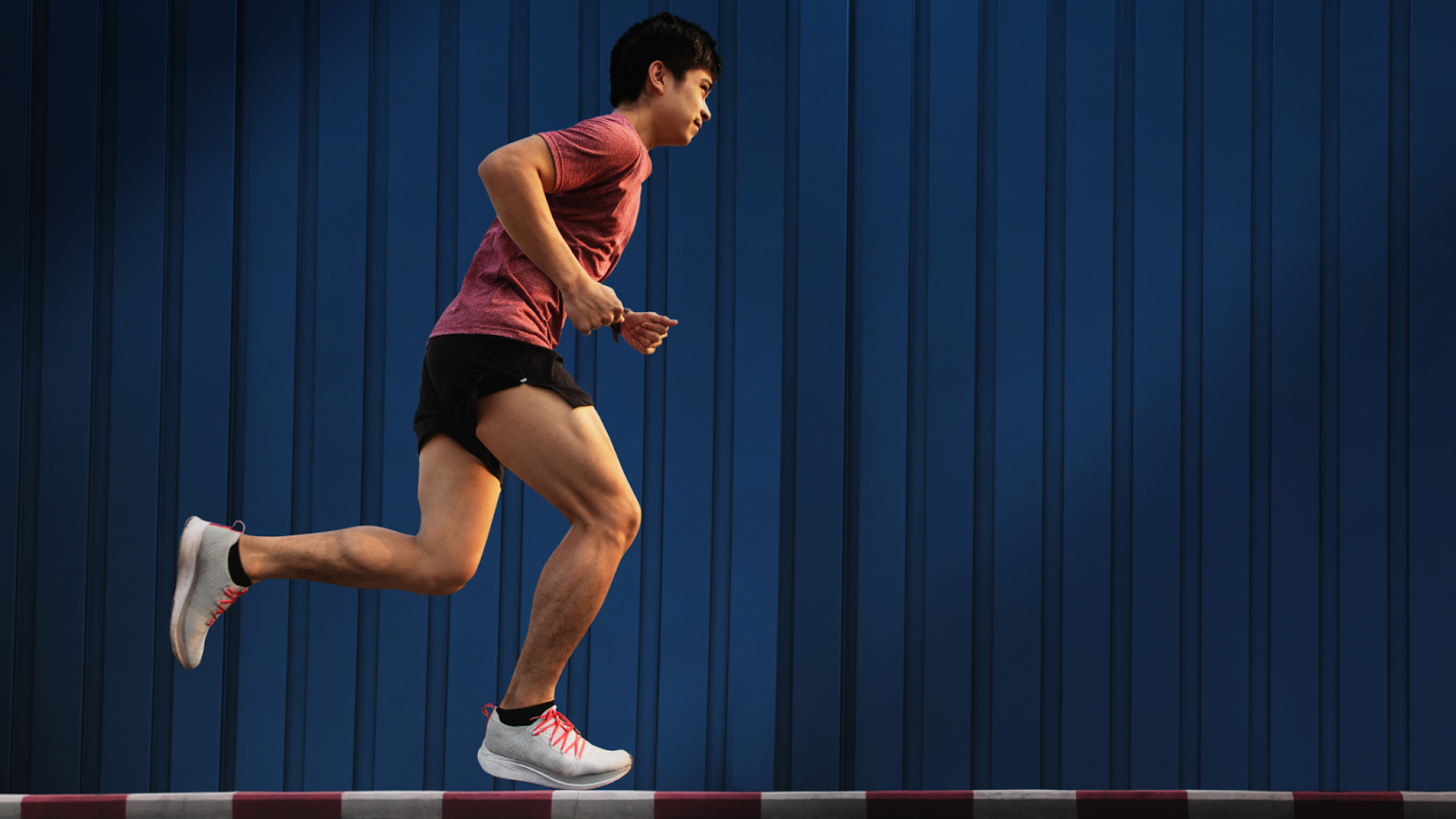
Landing your feet softly
Landing softly with a midfoot or forefoot strike, rather than a heel strike, can significantly reduce the impact on the knees. Heel striking often results in a braking effect, which increases the stress on the knee joint. A midfoot or forefoot strike allows for a more natural absorption of impact forces, reducing the risk of knee pain. Focusing on a quick, light cadence and aiming for a stride rate of around 170-180 steps per minute can help achieve this more efficient foot strike.
Perfect foot stride
Paying attention to stride length and cadence is also important for minimizing knee pain. Overstriding, where the foot lands too far in front of the body, can increase the impact on the knees and lead to pain. Shortening the stride and increasing the cadence can help ensure that the foot lands closer to the body’s center of gravity, reducing the stress on the knees. Practicing these adjustments gradually and consistently can lead to improved running form and a reduction in knee pain.
Improving your running form doesn’t require an overhaul—it’s about making consistent, mindful changes that protect your joints and enhance your stride. By focusing on posture, core engagement, foot strike, and stride length, you’ll not only minimize knee pain but also boost your endurance and performance.
Do you want help perfecting your form and staying motivated?
Join our running club today! Our community is full of experienced runners and beginners alike, all supporting each other in becoming stronger, smarter, and injury-free.